Faux Flower Mason Jars: Lasting Displays With No Water
How to make faux and dried stems look natural in a mason jar: choosing two or three stem types, trimming wire stems, anchoring them with dry filler or foam, and keeping the display dust-free.
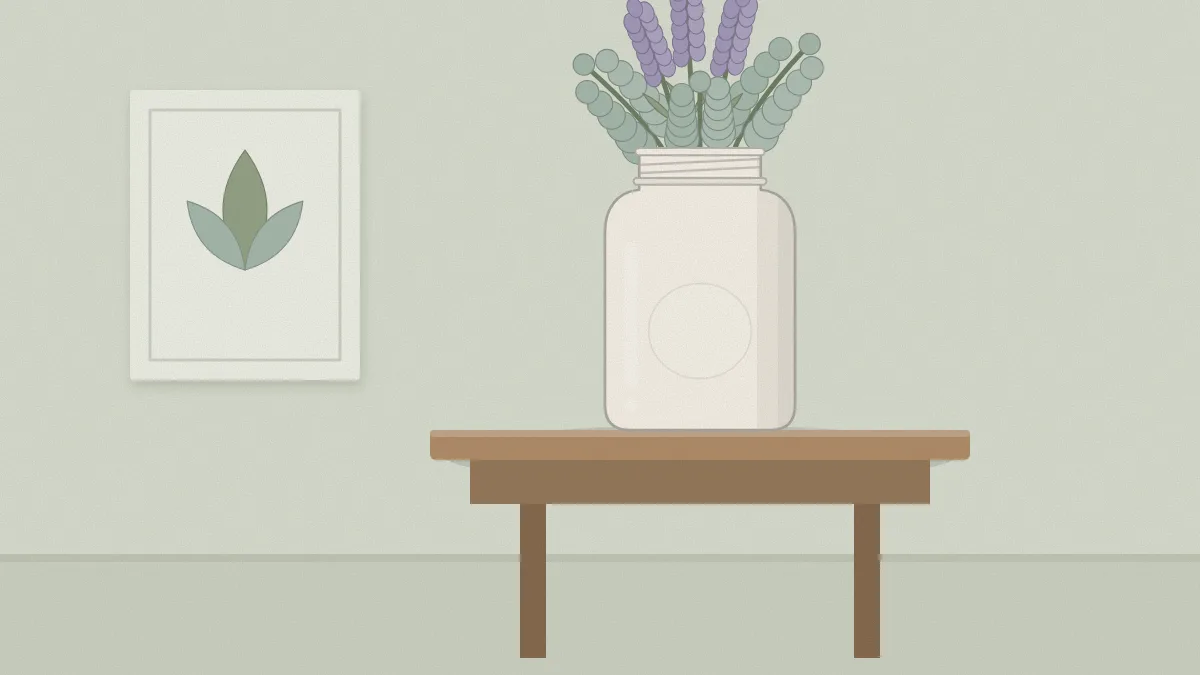
Putting faux flowers in mason jars solves the two problems that make fresh arrangements short-lived: there is no water to change and nothing to wilt. A jar of well-chosen artificial or dried stems can sit on a shelf for a whole season and look the same on the last day as it did on the first.
The catch is that faux stems show their shortcuts. Stems left too long, a single bunch dropped in untouched, or an arrangement that leans to one side all read as artificial at a glance. A few minutes of trimming, anchoring and arranging is what makes the display convincing.
Why faux stems suit painted and wrapped jars
Fresh flowers need water, and standing water can lift an exterior finish at the rim and base. That is why fresh stems belong in clear, unpainted jars. Faux and dried stems need no water at all, so they can go in any jar you have decorated: painted, distressed, wrapped in twine or covered in fabric.
An opaque jar also hides the least attractive part of an artificial stem, which is the plastic-coated wire below the leaves. In a clear jar the stems and whatever holds them are on show, so the filler becomes part of the design. If you would rather work with fresh stems, the guide to mason jar flower arrangements covers water, conditioning and clear jars.
Before you start, check the jar for chips and cracks, especially around the rim, and recycle any damaged one.
Choosing two or three stem types
One type of flower in a jar can look like it came straight out of the package. Two or three types, each doing a different job, look gathered. More than three usually turns busy in a container this small.
| Role | What it does | Examples |
|---|---|---|
| Focal stem | Draws the eye; use one to three | Faux peony, ranunculus, rose, dried hydrangea |
| Filler stem | Adds height and a second texture | Faux lavender, dried bunny tail grass, wheat |
| Greenery | Softens the rim and fills gaps | Faux eucalyptus, olive, fern sprigs |
Keep the colors restrained: one flower color plus green, or two close tones such as cream and blush. Matte petals and leaves tend to look more natural than shiny ones.
Getting the proportions right
A useful starting point is to let the tallest stem stand about one and a half to two times the height of the jar, measured from the table. A regular-mouth pint is roughly 5 in (13 cm) tall, so the tips of the tallest stems land somewhere around 8 to 10 in (20 to 25 cm). Jar dimensions vary by maker, so measure your own.
The opening matters too. A regular mouth is about 2 3/8 in (60 mm) across and holds a small bunch upright with little help. A wide mouth, at about 3 in (76 mm), lets stems splay unless you add more of them or anchor them.
Trimming wire stems to length
Most faux stems have a wire core, and household scissors will not cut it cleanly. Use wire cutters.
- Hold the stem against the outside of the jar with its base level with the bottom, and note where you want the flower head to sit.
- Mark the cutting point with your thumbnail or a small piece of painter’s tape.
- Cut a little long first. You can always take off more, but you cannot add it back.
- Point the stem down toward the table as you cut, so the offcut drops instead of flying.
- Strip any leaves that would sit below the rim. They crowd the opening and push other stems out of place.
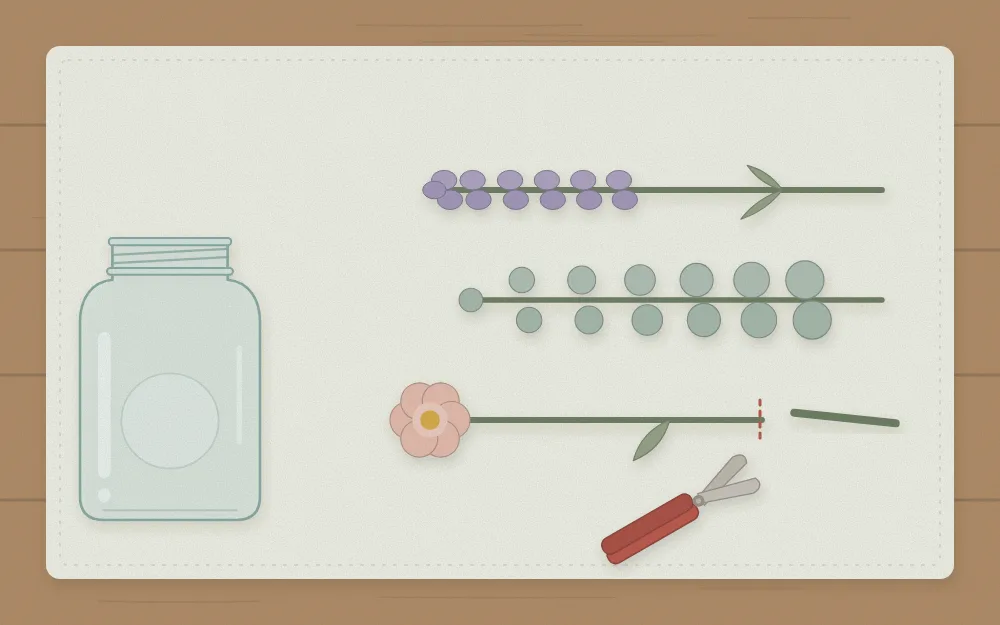
Cut wire ends are sharp. Keep the cutters, the offcuts and the trimmed stems away from young children and pets, and sweep up the small pieces when you finish.
Tip
Stems from a bunched bouquet are often joined into one thick trunk. Cut them apart first: single stems are far easier to place.
Anchoring stems so they stay put
Without water or a tight fit, light stems drift and tip. There are two simple fixes.
Dry filler
Pour in about 1 to 2 in (2.5 to 5 cm) of smooth stones, glass pebbles, dry sand or dried moss, then push the stems down into it. Lower the first handful of stones in gently so they do not strike the bottom of the glass. In a clear jar, choose a filler you are happy to look at.

Dry floral foam
For a painted or wrapped jar, a block of dry floral foam trimmed to fit snugly inside gives the firmest hold. Cut it with a craft knife over paper, press it in below the rim, and push each stem into it.
Loose fillers and foam crumbs are small parts. Keep them away from young children and pets.
Arranging the stems
Start with greenery, placing a sprig or two so it leans over the rim. Add the focal flowers next at slightly different heights, then tuck the filler stems behind and between them. Turn the jar as you go so no side is left bare.
Because the stems are wired, you can bend them. A gentle curve in each one and a few opened-out leaves remove the straight, stiff look.
What to expect from dried stems
Dried flowers and grasses bring real texture, but they are fragile and they shed. Seed heads drop, petals crumble when squeezed, and stems snap rather than bend, so cut them with sharp scissors and handle them as little as possible.
Place a dried arrangement where it will not be brushed in passing, and expect to sweep up a little debris beneath it. Strong direct sun fades dried color, and damp rooms soften the stems.
Dusting and where to display them
Faux stems last, but they collect dust. Go over petals and leaves with a soft, dry paintbrush every few weeks, or take the stems outside and shake them gently. If a stem needs more than that, follow the care note from its manufacturer, because some dyes and coatings mark when wet.
With no water inside, these jars are light and forgiving about placement. They work well grouped at different heights as mason jar shelf decor, and they are the practical choice for wall-mounted jars, where a spill is not a concern. For anything hung on a wall, use hardware rated for the weight and follow its instructions.
Frequently asked questions
How do you keep faux flowers from falling over in a mason jar?
Give the stems something to grip. A shallow layer of smooth stones, glass pebbles or dry sand works in a clear jar, and a snug block of dry floral foam works in a painted or wrapped one. Adding a few more stems also helps, because a fuller bunch supports itself against the rim.
How many faux stems fit in a pint mason jar?
It depends on the stem thickness, but a regular-mouth pint usually looks balanced with roughly five to nine slim stems across two or three types. Start with fewer than you think you need, step back, and add one at a time until the opening looks comfortably full but not packed.
Can faux flowers go in a painted mason jar?
Yes, and it is one of the best uses for a painted jar. Faux and dried stems need no water, so there is nothing sitting against the finish at the rim or base. The opaque sides also hide the wire stems and any foam or filler holding them in place.

