Best Paint for Mason Jars: Chalk-Style, Acrylic and Spray Compared
Five paint types for decorative mason jars compared by finish, coverage, drying and how well they distress, with a table and advice on when a primer helps.
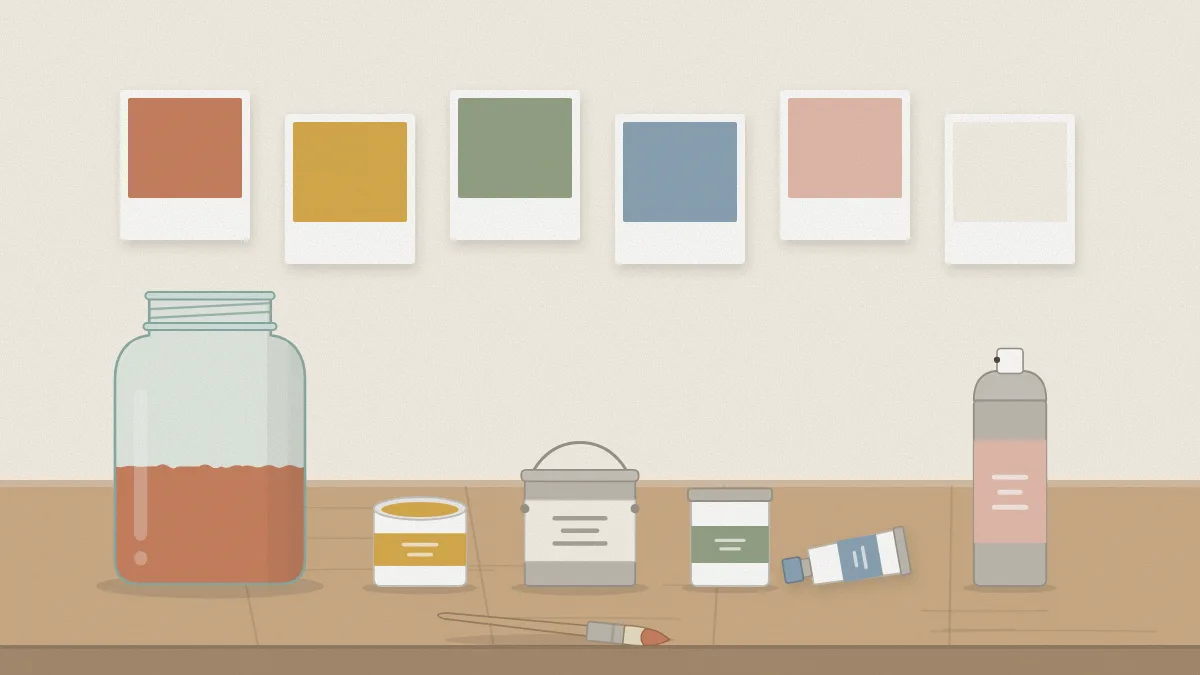
There is no single best paint for mason jars. There are five paint types that work on the outside of a glass jar, and each one gives a different finish, covers differently and suits a different project. Choosing well means deciding what you want the jar to look like before you open a pot.
This comparison describes paints by type rather than by product. Formulas differ between makers, so the label on the paint you buy always has the final word on whether it suits glass and how it should be applied.
The five types compared
| Paint type | Finish | Typical coats | Best for |
|---|---|---|---|
| Chalk-style paint | Flat, velvety matte | About 2 | Farmhouse looks and distressing |
| Acrylic craft paint | Matte to satin | About 2 to 3 | Color range, details, small projects |
| Multi-surface acrylic | Satin to gloss | About 2 to 3 | Smoother, tougher color on glass |
| Spray paint | Matte, satin, gloss or metallic | Several light passes | Batches and brush-free finishes |
| Chalkboard-finish paint | Dark matte, writable | About 2 | Label panels and bands |
Coat counts are rough guides. Pale colors over clear glass usually need one more coat than dark ones.
Chalk-style paint
Chalk-style paint is thick, highly pigmented and dries to a flat, powdery matte. It grips smooth surfaces better than most brush-on paints, which is why it is so widely used on jars. Two thin coats normally give solid coverage.
Its dry surface sands back easily, so it is the natural choice if you plan to wear the paint off the raised lettering. The trade-off is that the matte surface is porous: it marks and scuffs more readily than a glossier paint and benefits most from a clear topcoat.
Acrylic craft paint
Standard acrylic paint in small craft bottles comes in the widest range of colors and costs little to try. It is thinner than chalk-style paint, so expect streaks on the first coat and plan on two or three.
Basic craft acrylic is made mainly for porous surfaces such as wood and paper. On glass it can scratch off with a fingernail unless the surface was cleaned thoroughly and the finish is sealed. It is a good pick for stenciled details, dots and small accents over another base coat.
Multi-surface acrylic
Multi-surface acrylic looks like craft paint but is formulated to bond to slick materials, and many versions list glass on the label. It levels more smoothly, often dries to a satin or gloss finish, and generally holds on better once it has cured as the label directs.
Because it is tougher, it does not distress as gracefully: it tends to chip in flakes instead of wearing to a soft edge. Choose it for clean, modern finishes and crisp taped designs. It is a reliable option for color-block mason jars, where a sharp line matters more than a chalky texture.
Spray paint
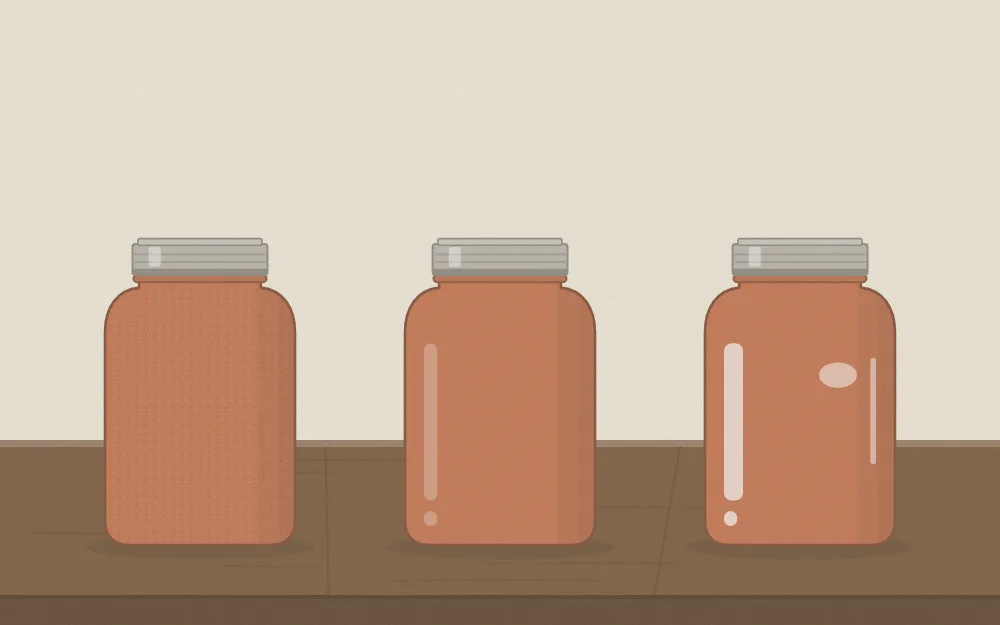
Spray paint gives the smoothest result, with no brush marks, and it is the quickest way to color a batch of jars. It is also the route to metallic finishes that are hard to achieve with a brush. Look for a can that lists glass as a suitable surface.
Technique matters more than with a brush. Stand the jar upside down, hold the can at the distance the label gives, and build the color in several light passes rather than one wet coat, which runs. The inside stays unpainted because the jar is mouth-down.
Watch out
Use spray paint outdoors or in a well-ventilated area, as the can directs, and protect the ground from overspray. Follow the label for recoat and drying times, and let the jars air dry.
Chalkboard-finish paint
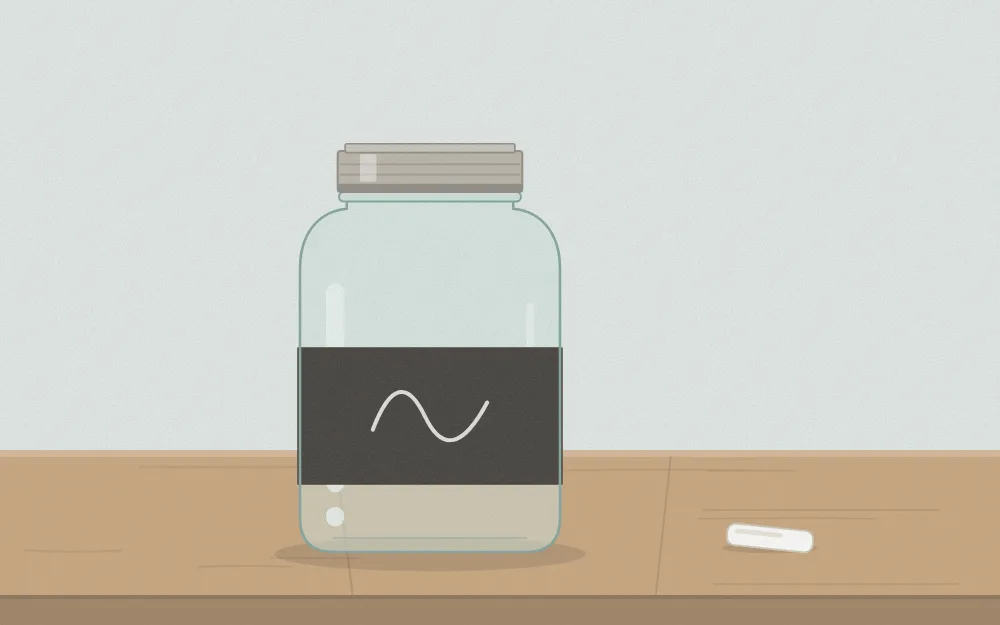
Chalkboard-finish paint dries to a dark, slightly rough matte that takes chalk. It is rarely used for a whole jar. Instead, it is brushed on as a taped rectangle or a band so the jar can be labeled and relabeled.
Check that the product lists glass, and follow any instructions for conditioning the surface before first use. Some labels suggest rubbing the side of a chalk stick over the dry panel and wiping it off so later writing erases cleanly.
Coverage, drying and distressing
Three practical differences decide most choices:
- Coverage. Chalk-style paint covers fastest by brush. Thin acrylics need more coats, and spray paint builds in light layers.
- Drying behavior. All of these paints feel dry on the surface well before they harden underneath. Recoat and cure times vary widely, so go by the label and let every coat air dry.
- Distressing. Chalk-style paint sands to a soft, feathered edge. Acrylic craft paint can be sanded with care. Multi-surface acrylic and spray paint resist sanding and may chip.
When a primer helps
Most jar projects need no primer if the glass is clean and the paint is made for it. A primer labeled for glass or slick surfaces is worth considering in three cases: when you are using basic craft acrylic, when a pale color has to cover in fewer coats, and when the jar will be handled a lot.
Primer adds a layer and a drying step, and it shows as an opaque coat wherever paint is later sanded away. If you plan to distress the jar so that clear glass shows, leave it out.
Tip
Clean glass matters more than the paint type. A wipe with rubbing alcohol before the first coat improves the grip of every paint on this list.
What no paint will do
None of these paints makes a jar suitable for anything beyond decoration, and no label claim about durability changes that. Paint goes on the outside only, and painted jars should be dusted or wiped gently with a barely damp cloth, never soaked or scrubbed.
A clear topcoat improves scuff resistance on any of the five types, especially chalk-style paint. The steps are in how to seal painted mason jars. Once you have chosen a paint, the brush method, coat by coat, is in how to paint mason jars.
Frequently asked questions
What kind of paint sticks best to glass jars?
Paints formulated for slick surfaces hold best, which usually means multi-surface acrylic, chalk-style paint or a spray paint that lists glass on its label. Whatever you choose, degrease the jar first and apply thin coats, because surface preparation affects adhesion as much as the paint type does.
Is chalk-style paint or acrylic better for mason jars?
It depends on the look. Chalk-style paint covers quickly, dries flat and sands back well for a worn farmhouse finish. Acrylic offers more colors and a smoother, slightly shinier surface that suits modern designs. Many people use chalk-style paint for the base and acrylic for small details.
Do you need to prime a mason jar before painting?
Usually not, as long as the glass is clean and the paint is made for glass. A primer for slick surfaces can help when using basic craft acrylic or a very pale color. Skip it if you plan to sand the paint back, since the primer would show.